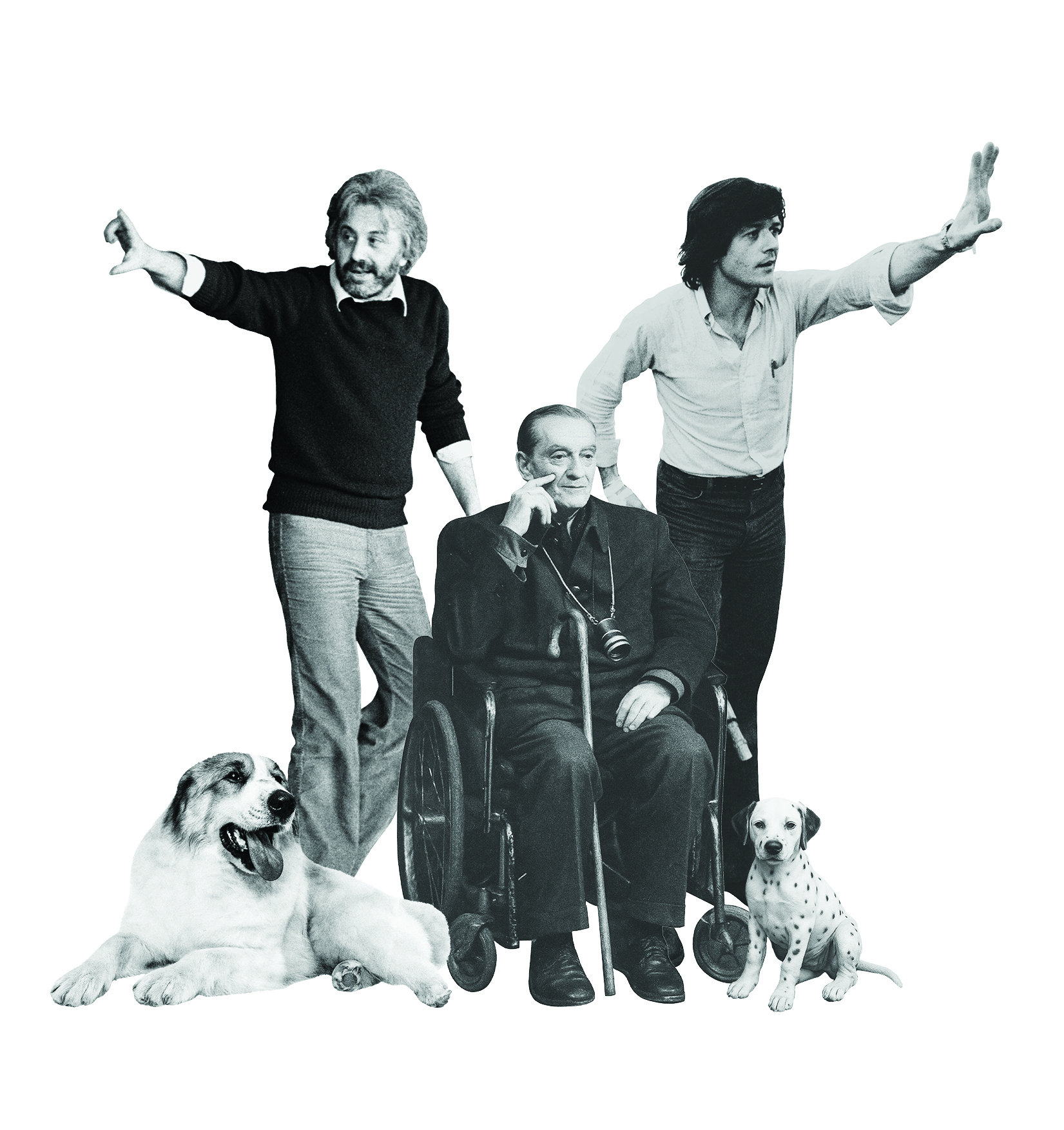
La rivoluzione del Ring. Visconti Ronconi Chéreau en-US

January 30 – May 3, 2026
The second floor of the Museo Teatrale alla Scala is home to the Livia Simoni Library, a collection of publications on subjects relating to the history of the theatre. It opened in 1952 and, thanks to the wealth and rarity of the volumes, is a reference point for specialist studies.
Libraries are places for research and pleasure – there is such a thing as intellectual contentment – but research can be both creation and recreation. Now, within these walls, a story of half a century ago is being brought back to life, the story of how, during the 1970s and following variations in tastes, the image of Richard Wagner’s Ring des Nibelungen changed as it approached its first century of life.
This story, the consequences of which were unstoppable despite displays of resistance that included accusations and threats aimed at the directors and superintendents, finds in Milan one of its crucibles. Our tale unfolds around the Milan of La Scala and of the Piccolo Teatro, so often in unison, and is concentrated in what was less than a decade but takes place at the highest levels of quality. One name follows another, the events are entwined around Europe, amidst performances and thoughts about performances, in a constant dialogue with reality.
To start, there are examples of the productions of the Ring staged at La Scala from the mid-20th century, when, between 1937 and 1971, the mastermind was the stage director, Nicola Benois. This illustrative continuity, overshadowed but not completely ousted by events in the Bayreuth of Wagner’s grandchildren, that is, a change in direction towards a more or less symbolic abstraction, came to a sudden halt in 1972 when Luchino Visconti was invited to direct a new production of the Ring, with Wolfgang Sawallisch on the podium. This was the moment of the monumental film about Ludwig, the king of Bavaria and Wagner’s patron. However, Visconti fell ill and was unable to confront Das Rheingold. He passed the task on to the rising star of the Italian theatre, Luca Ronconi who had by his side the set and costume designer, Pier Luigi Pizzi. Theirs was a challenge that, in other parts of Europe, too, would lead to a renewal of the Ring, bringing it back from the abstract plain to that of historical reality. The scandal grew, but the Milan project was interrupted in 1975. In the meantime, at the Opéra in Paris, a new version of the tetralogy – the year was 1976 – was planned under the baton of Georg Solti, although, in the event, only Das Rheingold and Die Walküre were staged. The Prologue was directed by Peter Stein, the first day by Klaus Michael Grüber, after his experience in Strehler’s Milan. Many years later, La Scala would invite Grüber to produce the entire cycle working alongside the conductor, Daniel Barenboim, but he died before being able to embark on the project.
The year 1976 marked the Bayreuth debut of the Jahrhundertring, the result of the exceptional collaboration between Pierre Boulez and Patrice Chéreau, also fresh from an experience at Milan’s Piccolo Teatro. The violent attacks on the four productions, with sets by Richard Peduzzi, were followed by undisputed and indisputable acclaim. Tristan und Isolde followed in 2007 at La Scala, with Barenboim on the podium. Ronconi and Pizzi produced a splendid cycle of the Ring between 1979 and 1981 at the Teatro Comunale di Firenze, with Zubin Mehta as conductor, and although it had met with little appreciation in Milan, this time the consensus was unanimous.
This story might appear to be a tale with a happy ending, but it is a page of cultural history, told in books, documents, sketches, film clips, props, press reviews and costumes, but occasionally the powers of concentration wane and the library becomes a storehouse of apparitions.


I. PRELUDE


II. INSIDE LUDWIG, 1972


III. THE TETRALOGY THAT NEVER WAS: LA SCALA 1972

